Chicly
Sellers on Chicly can pick the influencer they want and reach them inside the app, instead of chasing creators on TikTok.
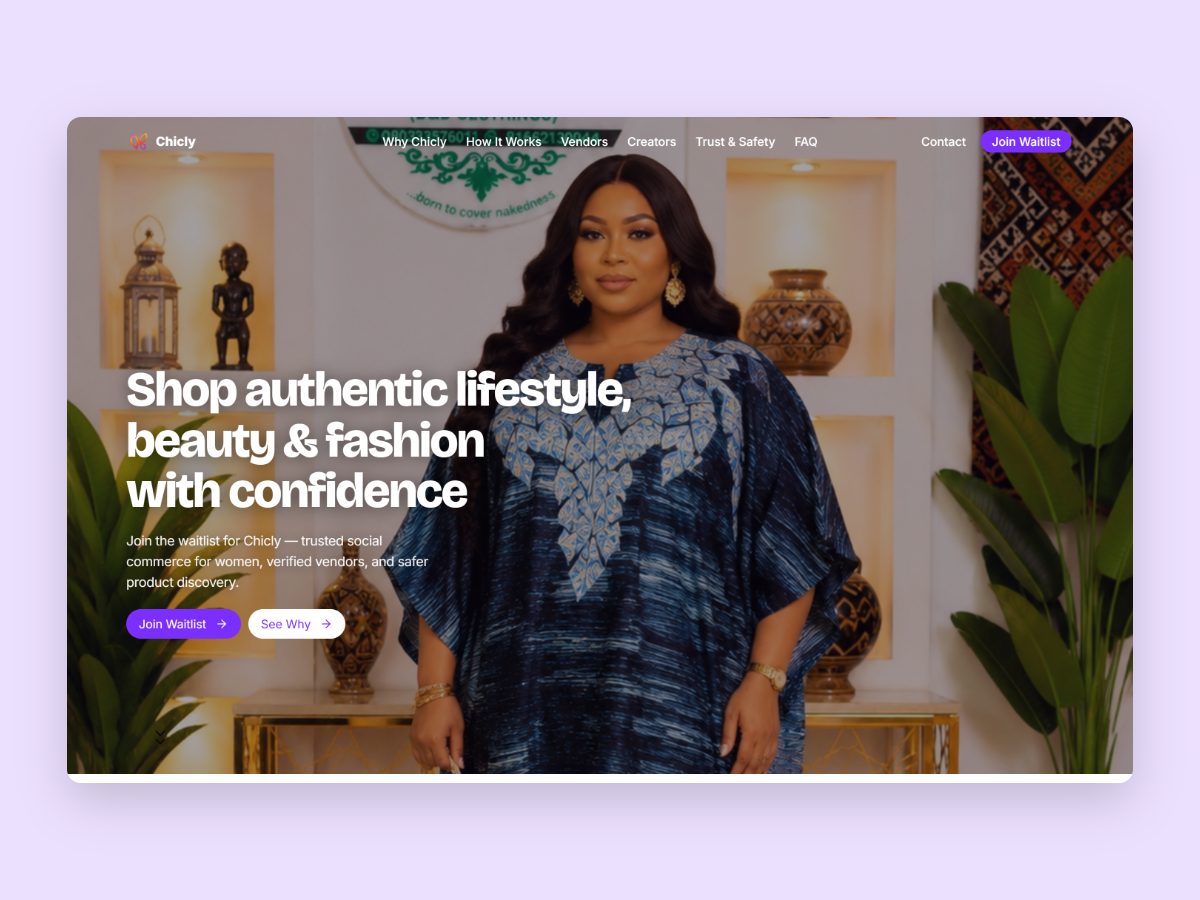
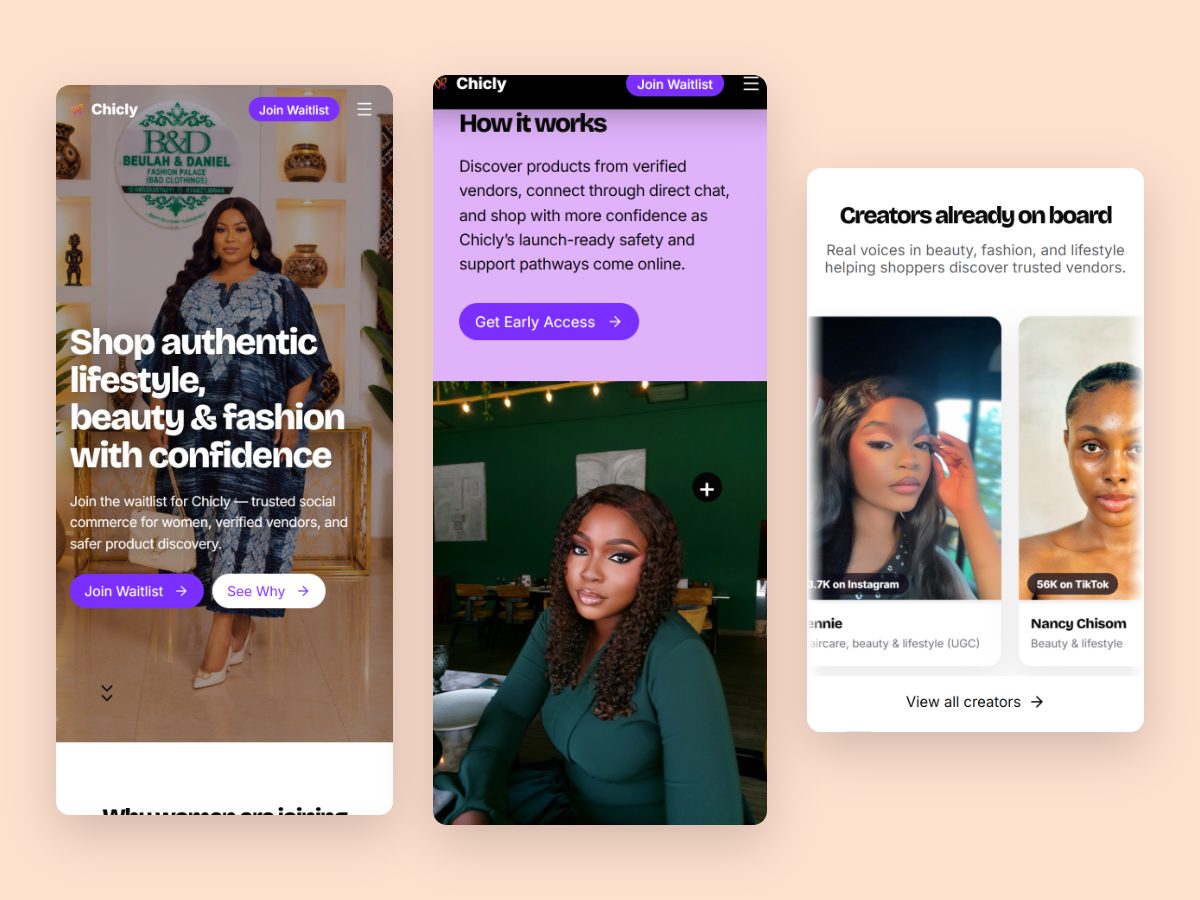
Overview
Chicly is a trust-first social-commerce app for urban Nigeria. It connects shoppers in Lagos, Abuja and Port Harcourt with the fashion, beauty and lifestyle vendors they already buy from on Instagram, TikTok and WhatsApp, and with the creators who recommend them.
We designed the product from scratch. As a product designer and researcher, I was involved from the very first vendor interviews through to the Lovable prototypes the developers worked from.
Problem
Social commerce in Nigeria happens in places that were never built for buying and selling. Vendors showcase their products on Instagram and TikTok, close their sales on WhatsApp, and depend on referrals for new customers. Shoppers, meanwhile, have no reliable way to tell a trustworthy vendor from a scam.
The gap we set out to close was reach. Sellers who want an influencer to promote their products have no straightforward way to connect with one, and the research showed that this gap sits alongside several others:
- Discovery stops at referrals: vendors struggle to reach customers beyond their own social circle, and paid ads on Facebook and Instagram rarely deliver results.
- Views do not become sales: TikTok videos bring attention, but vendors find it hard to turn viewers into paying customers.
- Trust is hard to prove: buyers fear scams, and vendors have no structured way to display reviews or show that they are legitimate.
- Influencer marketing feels out of reach: vendors admire it but cannot afford big influencers, and on platforms such as TikTok there is no simple way to reach the creator they want to work with.
- Selling is manual: payments are confirmed by hand, stock is tracked in WhatsApp messages and notebooks, and delivery takes up much of a vendor’s time.
How might we help shoppers trust the vendors they discover on social media, and help vendors reach new customers through creators they can afford, without leaving the app?
On Chicly, the seller chooses the influencer they want and reaches them directly inside the app.
Research
Firstly, we wanted to understand how shop owners engage customers and present their products on Instagram and TikTok, which trust and visibility barriers they face, and whether Chicly’s concept would be valuable to them. In June 2025, we set these questions out in a research plan, alongside the methods we would use: user interviews, surveys, social listening, UX audits of comparable platforms such as TikTok Shop, Instagram Shop, Pinterest and Shopify, and prototype testing.
Mapping the shopper’s experience. In July 2025, we used design thinking tools to understand the people we were designing for. An empathy map captured what urban Gen Z and millennial shoppers say, think, feel and do: they want authentic reviews and clear information, they wonder whether a seller can be trusted, and they feel excited by trends but anxious about scams and wasting money. A journey map then followed the shopper through four stages, Access, Choose, Share and Reserve, and recorded the pain points and opportunities at each one. Finally, affinity mapping grouped the insights into clear themes: trust and credibility, rich content, social proof and community, convenience, reliable logistics, and incentives.
This analysis also raised an important question: how could Chicly connect sellers with influencers without the deal moving off the platform? The answer, an influencer marketplace inside the app, became the basis of Hype Boost.
Talking to vendors. In August 2025, I led interviews with five female vendors across different product categories: bags, skincare, wigs, perfume oils and hair products. The interviews took place over Zoom, Google Meet and WhatsApp calls.
Running the interviews was not always straightforward. Some vendors declined to be recorded, poor network connections disrupted some sessions, and several vendors needed multiple reminders before committing to a time. Despite these challenges, we gathered rich qualitative data, which we transcribed and coded for thematic analysis.
WhatsApp is where real sales happen; Instagram is just for show.
TikTok videos bring attention, but it’s hard to convert views into paying customers.
Getting new customers is the hardest part. Without referrals, it’s almost impossible.
Through the analysis, we identified several key patterns that were common across the vendors:
- WhatsApp is where sales happen. All five vendors rely on WhatsApp to close their sales. Instagram is used for visibility, and TikTok brings strong engagement but few conversions.
- Growth depends on referrals. Vendors have little organic discovery, and their visibility rarely extends beyond their immediate social circle.
- Trust and payment create friction. Buyers often ask to pay on delivery, payment disputes are common, and there is no central way to track or review transactions.
- Influencers are admired but unaffordable. Vendors see the value of influencer marketing and find micro-influencers more approachable, yet they rarely work with them.
- Operations are manual. Delivery consumes time and money, and stock is managed through WhatsApp messages and notebooks.
These insights informed four directions for the product: building trust, simplifying how sales are handled, boosting discovery beyond referrals, and supporting growth through affordable influencer campaigns.
The research was summarised in three personas, which guided the design:
- Adaeze, the buyer (25, Lagos): she wants to find trendy, affordable fashion and to get validation from her peers before buying, but she fears scams and cannot verify a vendor’s quality.
- Tolu, the vendor (29, Abuja): she wants to grow beyond referrals and build a trusted brand, but she cannot afford big influencers and loses time on buyers who are not serious.
- Jessica, the nano-influencer (23, Port Harcourt): she wants to earn from her content while staying authentic, but brands tend to want bigger influencers, and she cannot track the impact of her campaigns.
User flows
The vendor sets the product, the audience, the budget and the content requirements.
Creators are part of the app, and can be filtered by niche, engagement and price.
The seller invites the creators they want.
Creators submit their content for approval, then post it.
Reach, engagement and clicks to the vendor profile.
Products and stories shared by vendors in the community.
Verification badges, reviews and ratings show who they can rely on.
A one-tap WhatsApp button with a pre-filled message.
Save what they find, or buy from the vendor.
How I built it
Chicly began in May 2025 as a curated directory of Instagram vendors, where shoppers could browse by category, explore curated collections and save items to a wishlist. As the research progressed, the product grew to reflect how vendors actually sell: on WhatsApp and TikTok as well as Instagram, and with influencers as a key source of trust.
- Research first. We began with a research plan, design thinking tools and vendor interviews, before designing a single screen.
- Turned the findings into personas. The research themes became three personas, a buyer, a vendor and a nano-influencer, so that every design decision could be checked against a real need.
- Defined the core idea. The research led to one clear principle: sellers should be able to choose and reach an influencer without leaving the app.
- Designed for real conditions. The requirements set clear constraints: the app had to work on low-cost Android phones and slow 3G networks, and to suit users with low digital literacy, with large buttons, few words and intuitive icons.
- Structured the app. We organised the app around five main tabs: Home, Discover, Hype Boost, Messages and Profile.
- Designed the influencer marketplace. Hype Boost is a space where sellers create campaigns, browse creators and select who promotes their products.
- Designed the community. A feed where users can share, chat with one another and find more information.
- Prototyped in Lovable, built in Cursor. Rather than handing over static designs in Figma, we moved to prototyping in Lovable, so that the team could work from prototypes that already behaved like the real app. We then built the app in Cursor.
Key decisions
- Bring influencers into the app. Rather than leaving sellers to chase creators on other platforms, we made creators part of Chicly itself, through the Hype Boost marketplace. Keeping the collaboration inside the app also meant that deals did not move off the platform.
- Let the seller choose. Sellers decide for themselves who promotes their products, which keeps them in control of their brand.
- Community alongside shopping. Users can chat and find information in the same app where they shop and sell, so they never need to leave it.
- Work with WhatsApp, not against it. Every vendor we interviewed closes sales on WhatsApp, so each product has a one-tap WhatsApp button with a pre-filled message, alongside Chicly’s own in-app chat.
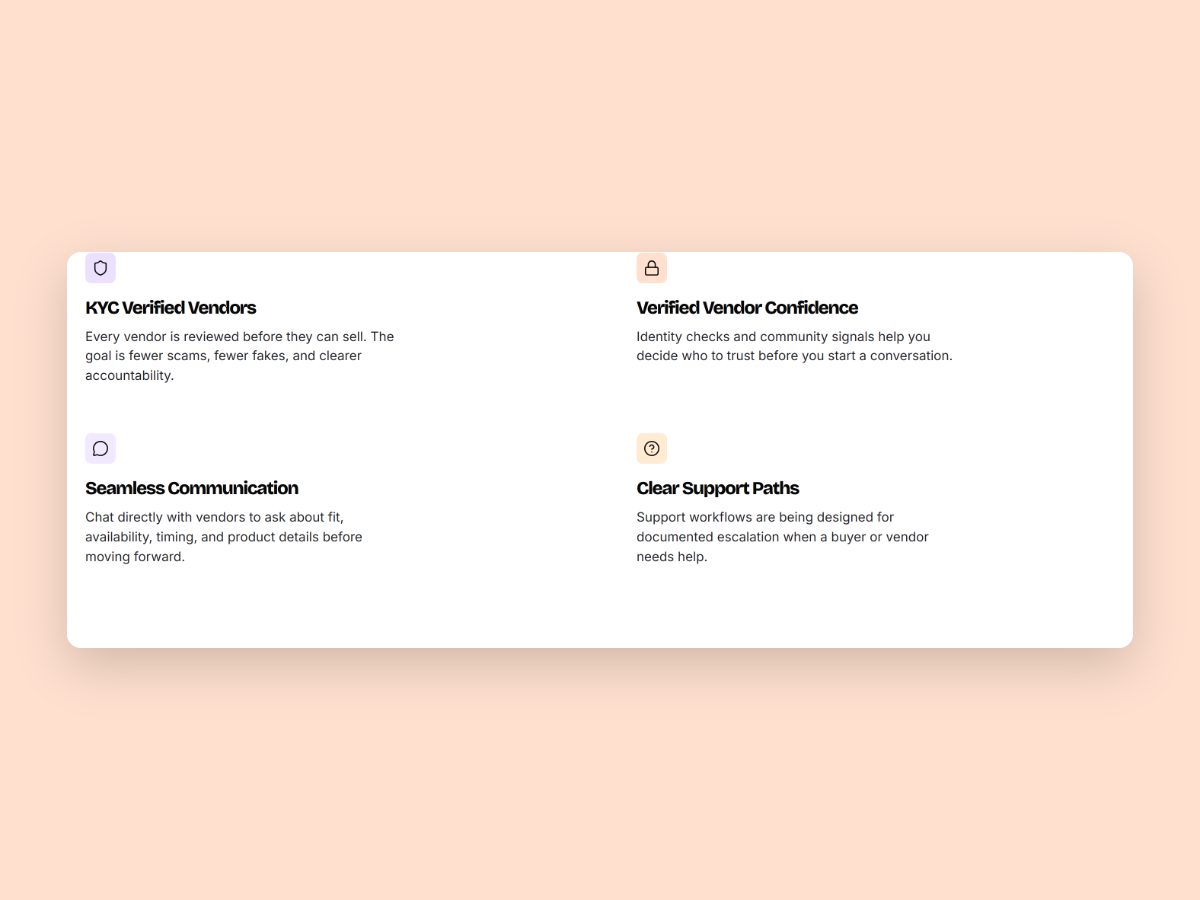
- Make trust visible. Vendors are checked before they are listed, from their business registration and identity to the activity on their online shop. They can be verified at three levels, Basic, Verified and Premium, and badges, reviews and ratings show buyers who they can rely on.
- Let vendors start quickly. Basic vendors can begin selling straight away and upgrade their verification later, so that onboarding never becomes a barrier.
Solution
Our solution centred on two key features, both of which I designed:
- Hype Boost, an influencer marketplace. Vendors create a campaign for a product, setting its audience, budget and content requirements. They then browse creators, filter them by niche, engagement and price, and invite the ones they want. Creators apply, submit their content for approval and post it, and vendors can follow the campaign’s reach, engagement and clicks to their profile.
- A community. A dedicated space where vendors share their products and stories, and where users can like, comment, share, save what they find, and chat to find more information.
Both features sit within a wider layer of trust: verification badges for vendors, reviews and ratings from buyers, and in-app chat alongside WhatsApp.
Outcome
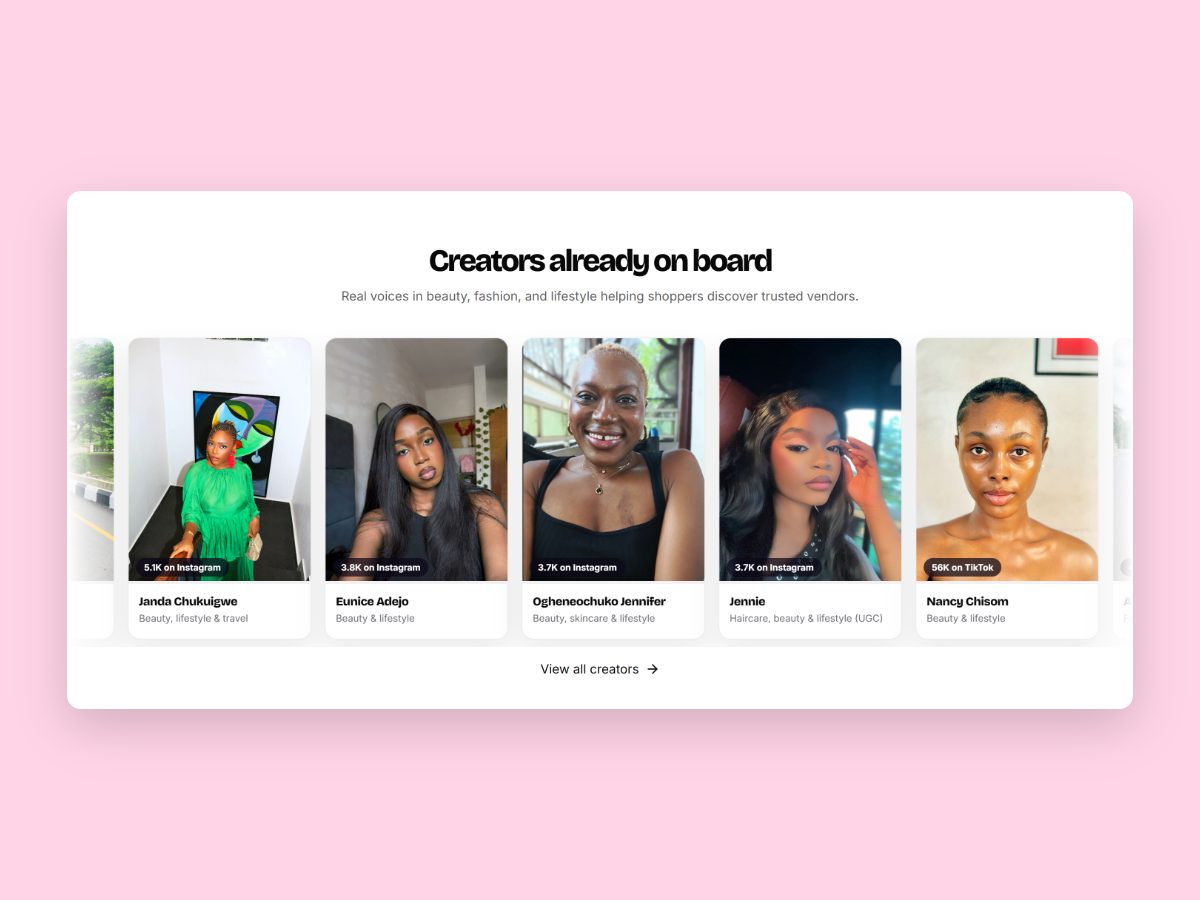
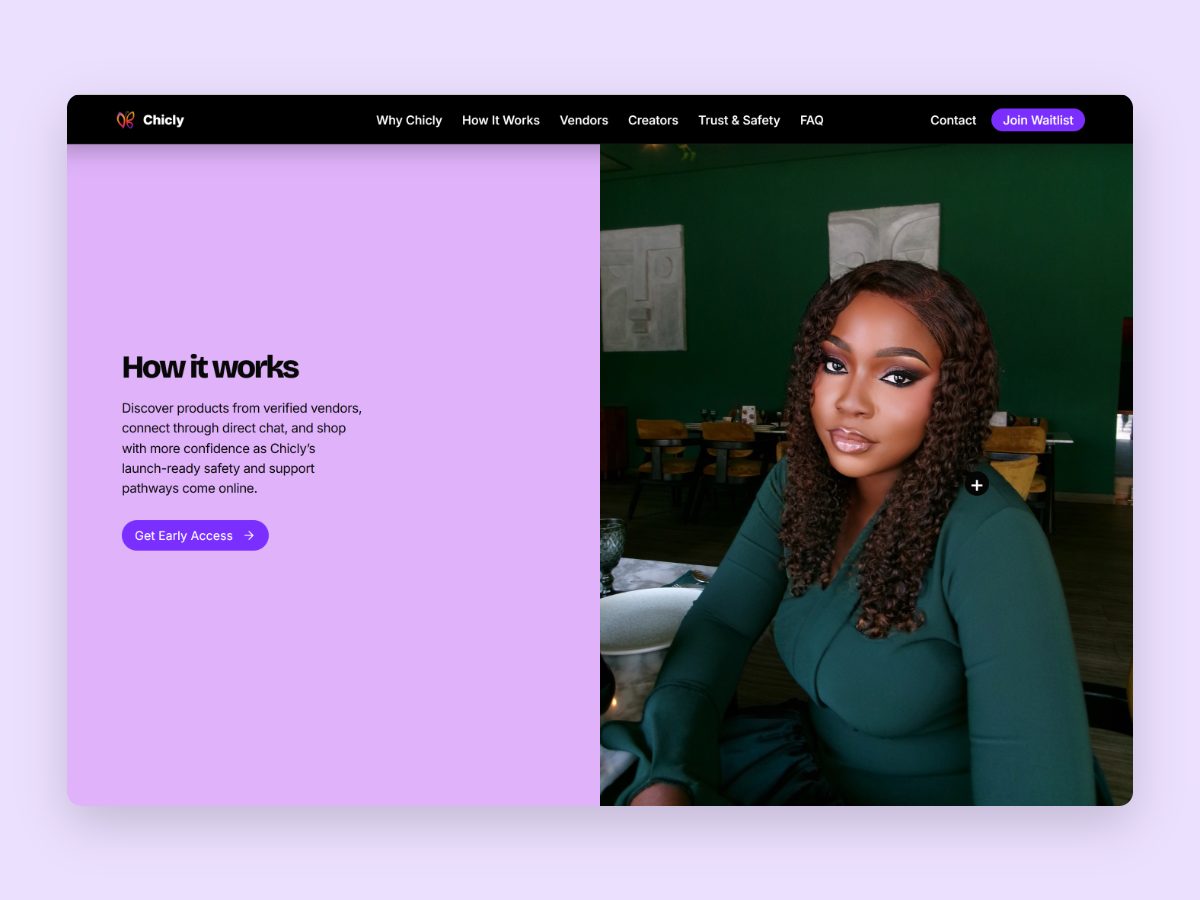
The designs moved from Lovable prototypes into a build in Cursor, and the Chicly beta launched in December 2025. Chicly’s waitlist site is live at chiclyapp.com, with creators already featured on it.
What I’d do next
- test the Hype Boost campaign flow with real vendors and creators
- identify where sellers hesitate when choosing an influencer, and refine that step
- learn what users rely on the community for most, and shape it around those needs
- review the whole app for accessibility
What I learned
Research leads the idea. Starting with vendor interviews meant the main ideas came from real people rather than from our assumptions. WhatsApp, referrals and unaffordable influencers all shaped the product we designed.
Research takes persistence. Scheduling delays, poor connections and vendors who preferred not to be recorded taught me to plan interviews with flexibility, and to take careful notes when a recording is not possible.
Shared research keeps a team aligned. Designing within a team taught me to make research easy to share, so that every designer works from the same understanding of the user.